суббота, 21 февраля 2015 г.

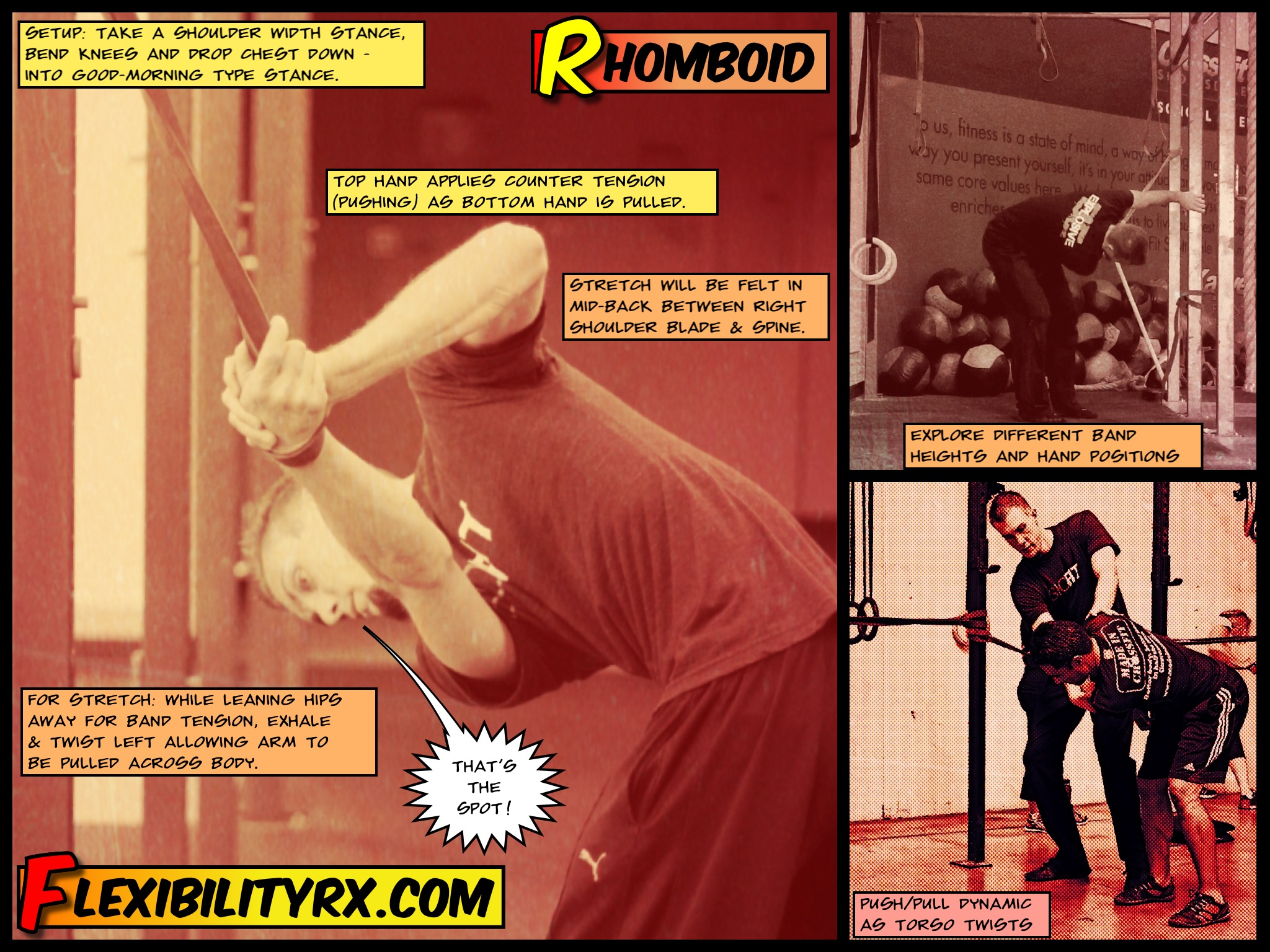
Rhomboid

Rhomboid Stretch

Rhomboid Stretch

This stretch for the mid-back is a quick way to improve shoulder flexion (your ability to straighten your arms overhead).
Rhomboid is part of the ‘Core-Four’ upper – the four muscles that can restrict the motion of the shoulder blade – which then limits any overhead movement.
The ‘Core-Four’ upper: rhomboid, levator scapula, pec-minor, and the rotator cuff (internal & external rotators).
You can incorporate a muscle activation sequence for rhomboid by pulling the shoulder blade in towards the spine on your inhale – after the stretch.
Inhale, pull the shoulder blade in, exhale and deepen the stretch – repeat 3-5x.
- Kevin Kula, “The Flexibility Coach” – Creator of FlexibilityRx™

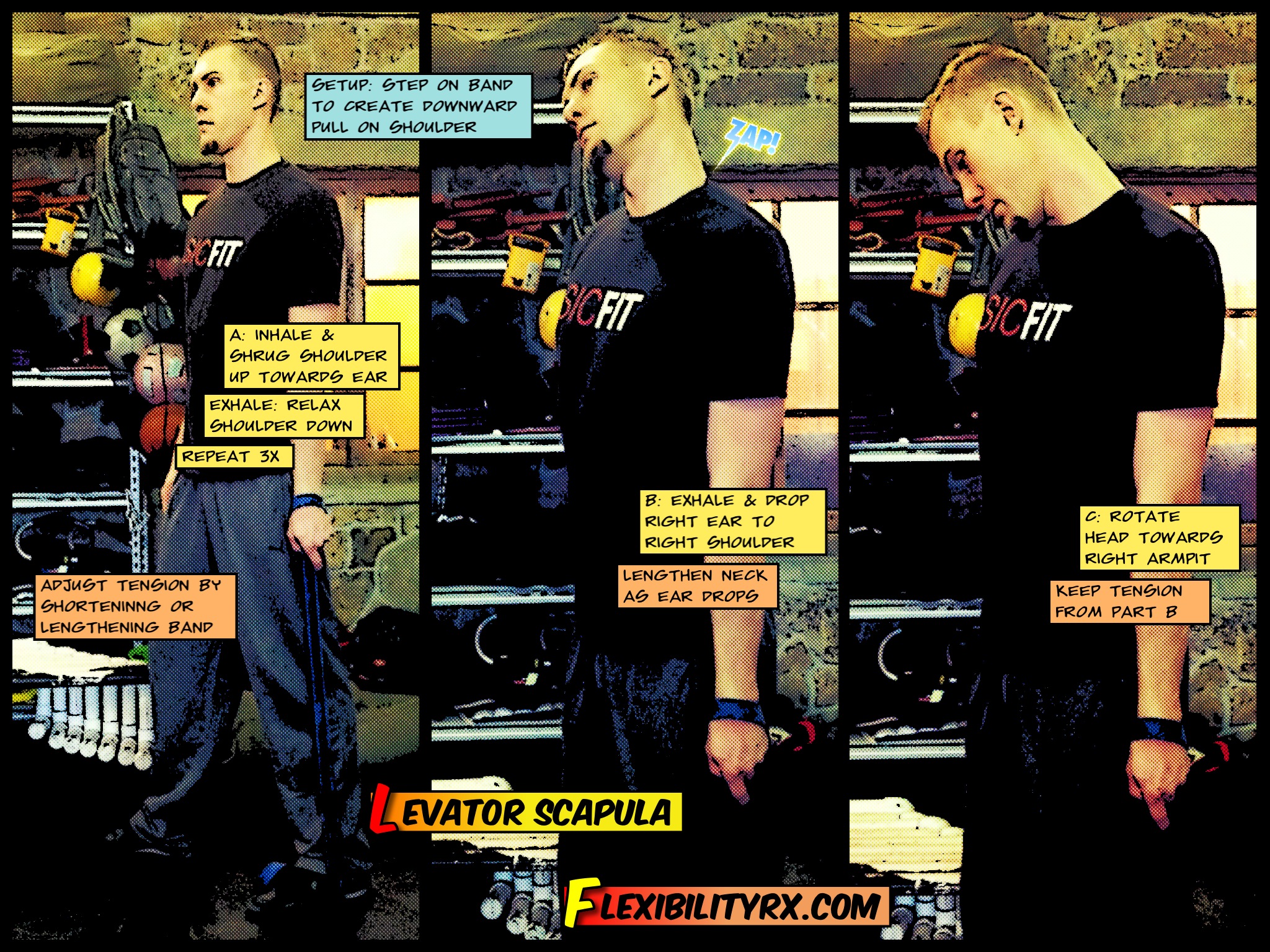
Levator Scapula

Levator Scapula - Neck Stretch

Levator Scapula Stretch

Levator scapula spans from the top of the shoulder blade to the side of the neck.
A tight levator scapula interferes with the fixed position of the shoulder blade during shoulder flexion – compromising shoulder position during overhead lifts.
That knot at the top of your shoulder blade is often a sign that levator scapula is acting as a brake to control forward head position (computer posture).
Tom Myers calls this muscle  ‘capitus preventus (from going) forwardus’ – referring to this action, which is not the muscle’s normal healthy function.
Proper treatment includes improving thoracic flexibility and ribcage position to allow the head to be better supported.
However, freeing the fascia of the neck with this stretch is a good approach for a more relaxed shoulder and resolving the knot that is often treated with a therapists elbow or through treatment with a lacrosse ball.
The goal is not to lengthen the muscle, but free the surrounding fascia, which is accomplished through lateral flexion and rotation of the neck. A much more effective approach than jamming an elbow or ball into the top of the shoulder blade!
Levator Scapula part of Deep Back Arm Line
(Image courtesy of Tom Myers: from his groundbreaking book – “AnatomyTrains“)
Above image  shows levator scapula on the left – spanning from side of neck down to supraspinatus of the rotator cuff and top of left shoulder blade.
Levator scapula is part of the ‘Core-Four’ Upper. It has a fascial connection to the supraspinatus muscle of the rotator cuff. Freeing this muscle along with the other muscles surrounding the shoulder blade allows for better shoulder flexion and stronger overhead lifts.
-Kevin Kula, “The Flexibility Coach” – Creator of FlexibilityRx™

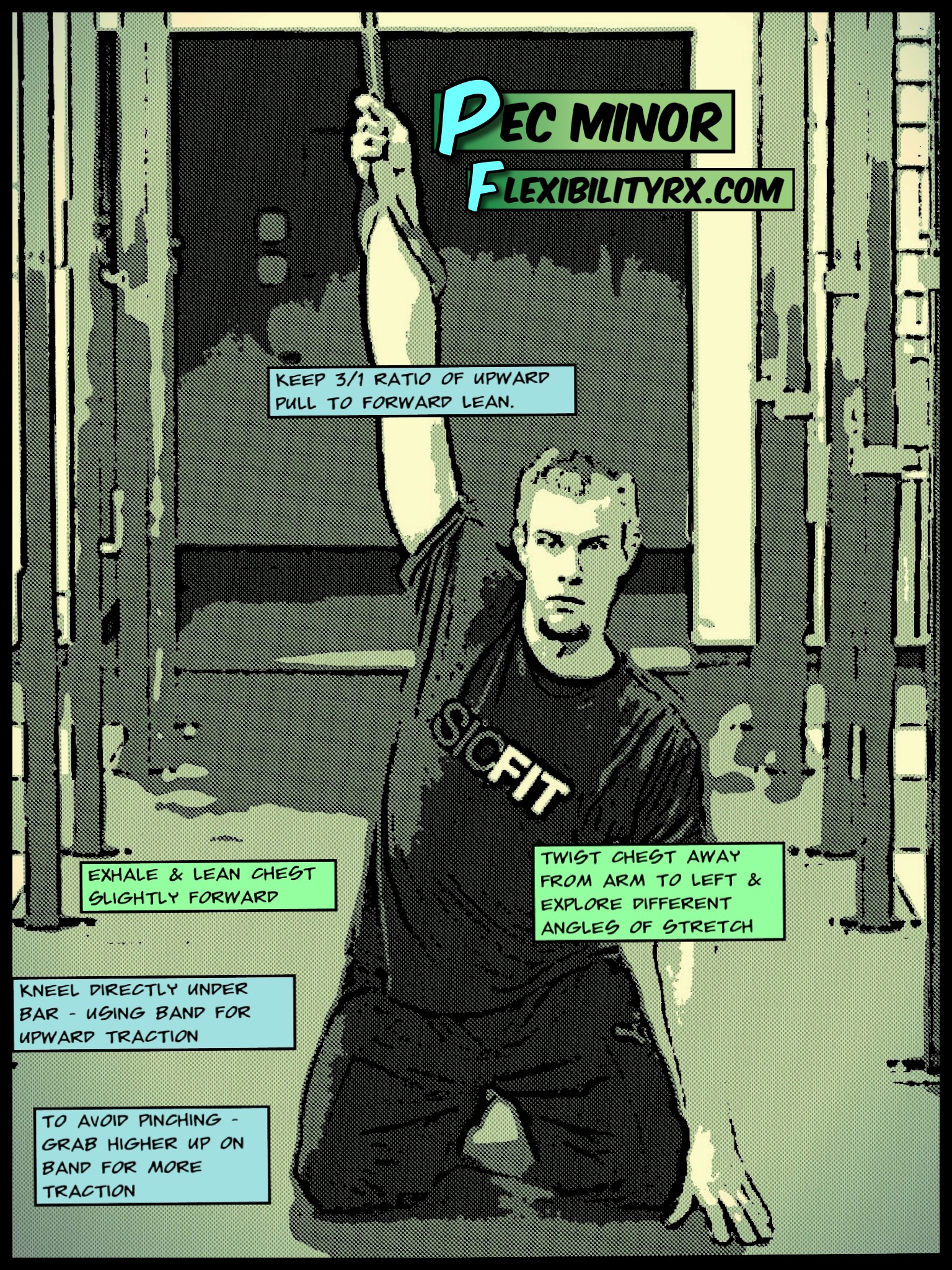
Pec-Minor Variations

Pectoralis Minor Stretch

Pectoralis Minor Stretch

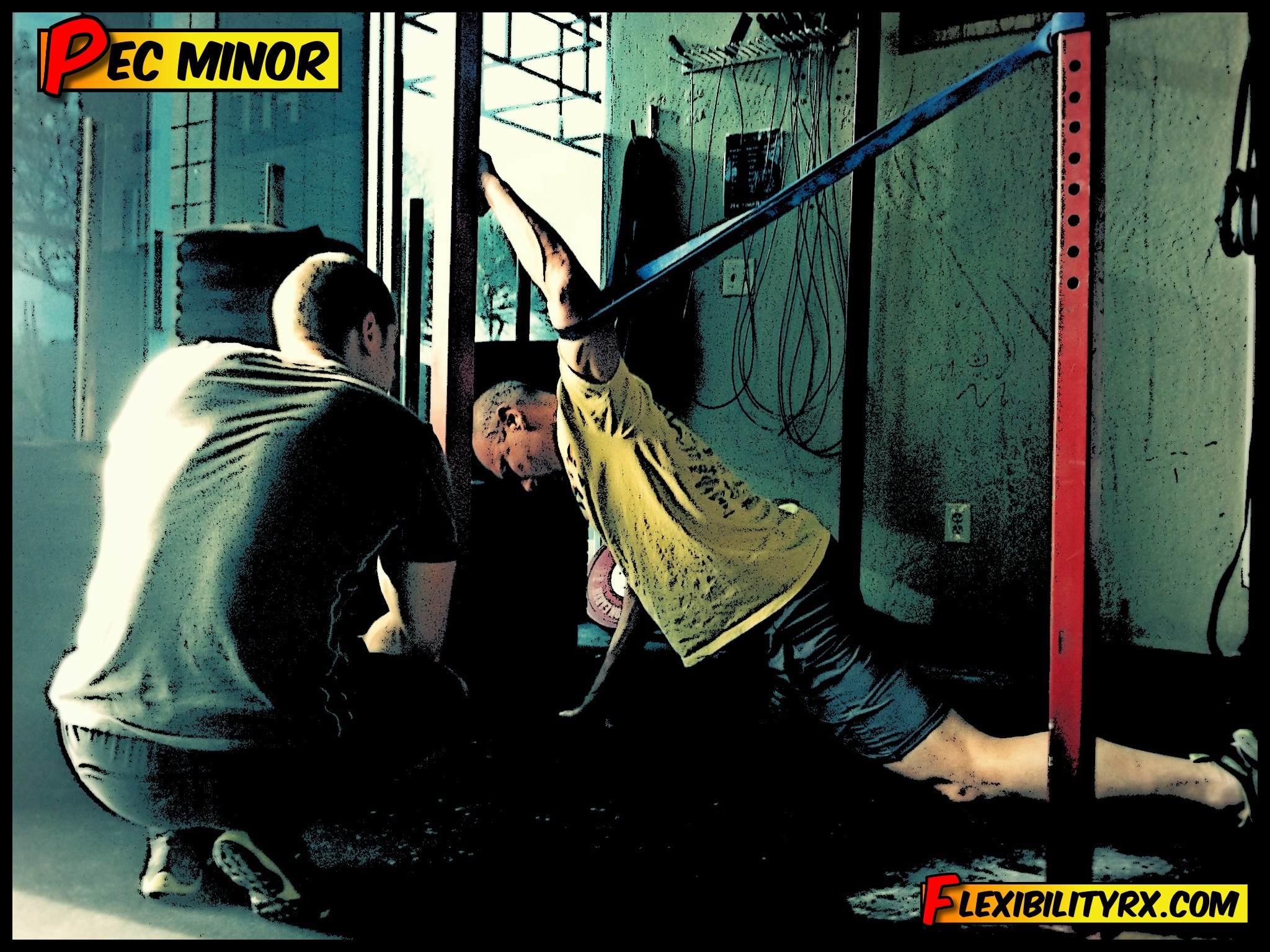
Pec-Minor is chronically tight amongst many athletes. Tightness can limit shoulder flexion range of motion for overhead lifts as well as pull the shoulder blade into a disadvantageous position. The pec-minor overhead band stretch was covered here.  This is a nice alternative for coaches to use with a group class when space doesn’t permit for the traditional bench stretch variation or a stretch on an exercise (swiss) ball. Pec-Minor Stretch Version 1 The overhead pec-minor stretch allows for a lot of shoulder traction, which eliminates pinching in the back of the shoulder that is common with pec-minor stretches.
pec-minor stretch
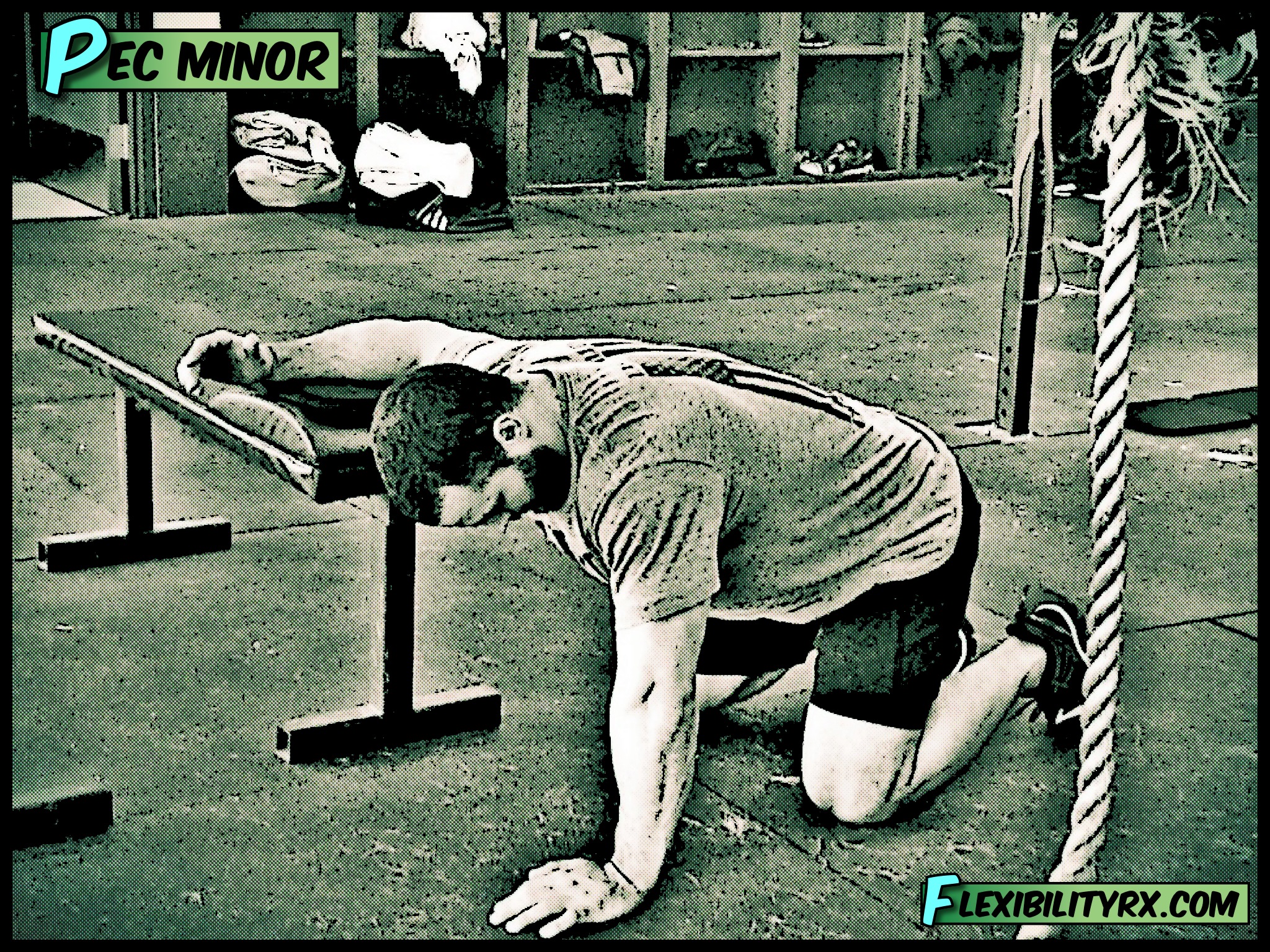
Pec-Minor Stretch Version 2 The traditional kneeling pec-minor stretch (as taught by Stretch-to-Win®) is a great option for individual gym members to use on their own.  A swiss ball is preferable, because it allows the elbow to be hooked onto the ball before leaning the chest away from the elbow for shoulder traction. Instead, a pad can be placed on a bench (or box of appropriate height) to hook the elbow.  To stretch the right pec, for example, you would move the elbow left on the pad for friction so that it is pulled to the right, once you lean the torso away to the left.  You would then exhale, and drop the chest down to the floor for the stretch, using the left hand for support.
best pec stretch
Pec-Minor Stretch Version 3 This is an innovative way to stretch pec-minor from a slightly different angle, using a band to create space (traction) in the shoulder joint.  Jon Lempke, instructor for Stretch-to-Win® helped me come up with this alternative that can be used, if version 1 (overhead stretch) is not tolerated well.
stretch for pec-minor
Finding the Right Version of a Stretch While certain stretches lend themselves to ‘best’ positions, it is always important to consider the need for different versions of stretches for different athletes.  The quad stretch on the floor, for example, is a nice alternative to the quad wall stretch that is commonly used – it is less intense and can be used by athletes with tightness in the shin and ankle.
Stretching Different Fiber Directions & Planes of Movement It is also important to stretch fascia not just muscle – by using the different angles and planes of movement for the three pec-stretches, athletes will be able to target all of the fascia of pec-minor and find the stretch that best suites their needs. - Kevin Kula, “The Flexibility Coach” – Creator of FlexibilityRx™

Shoulder Flexibility for Overhead Lifts

Shoulder Flexibility

Improving Shoulder Flexibility

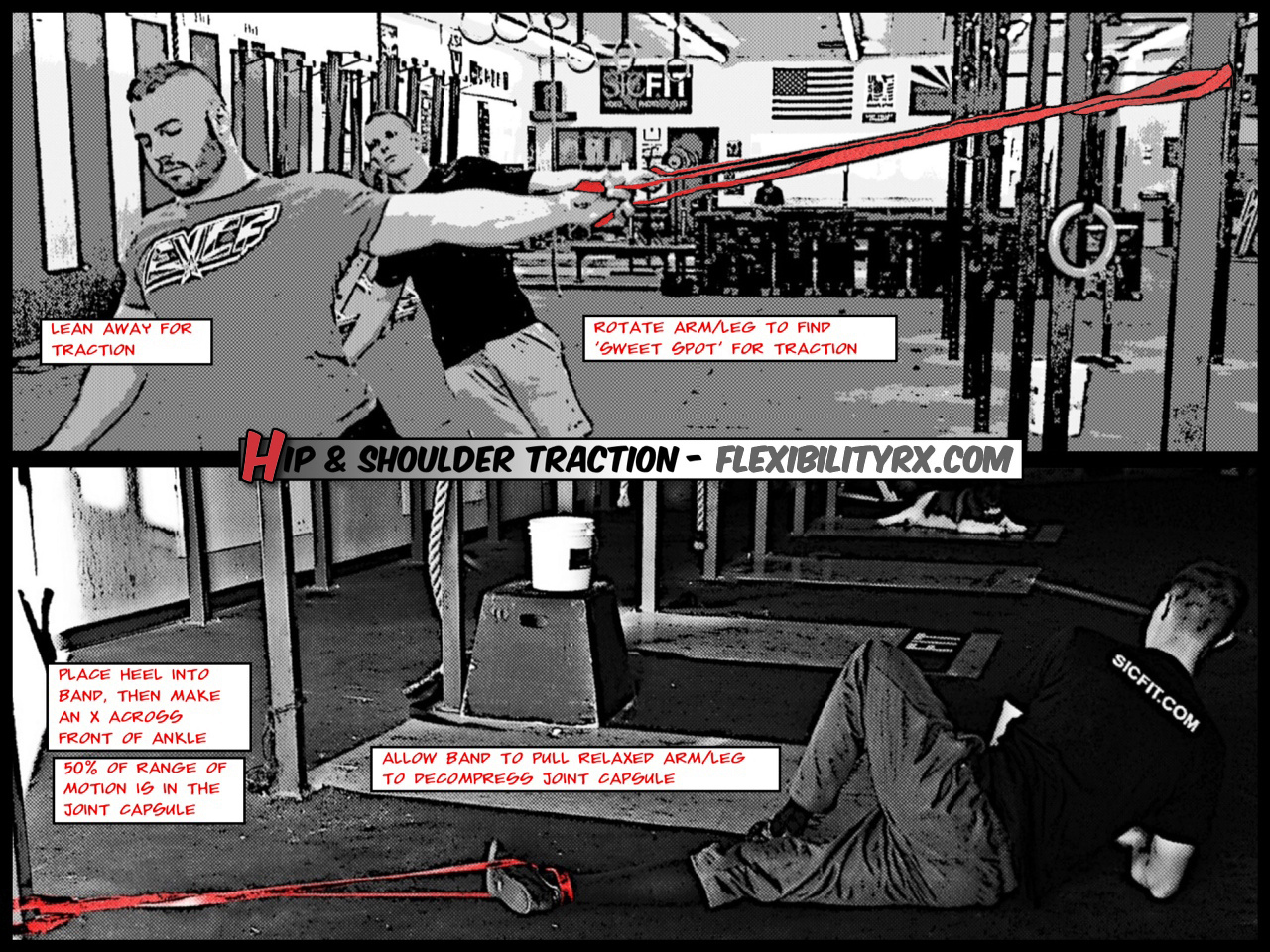
This traction sequence for the shoulder will help improve shoulder mobility. The three positions used target the glenohumeral joint at different angles.
Traction decompresses the joint-capsule which itself is often adhered restricting range of motion. While the goal here is to isolate the shoulder joint as much as possible, a subtle stretch is also applied to the muscles surrounding the shoulder blade. Rotate the arm in and out to find the ‘sweet-spot’ – the stuck spot in the shoulder joint.
Traction Down
The first position applies band traction to the shoulder straight down at a neutral position. By stepping on the band a downward pull on the shoulder joint is applied. This position also applies a subtle stretch to levator scapula by depressing the shoulder blade away from the neck.
Traction Front
The second position applies traction at a front angle, also adducting the scapula away from the spine. This applies a subtle stretch to the rhomboids in back – between the scapula and the spine.
Traction Side
The third position applies traction at a side angle (top photo) taking the arm out to the side.
Muscle Activation Sequence
All three positions allow for activation of the muscles surrounding the shoulder blade, the activation consists of a stretching technique called PNF. PNF involves a 3-5 second contraction followed by a relaxation. The stretch is deepened on the relaxation slightly. Activating the muscles surrounding the shoulder blade along with a gentle traction is a great way to prepare the shoulders pre-workout.

This is a great sequence to improve shoulder flexibility for overhead lifts like the overhead squat and snatch.

- Kevin Kula, “The Flexibility Coach” – Creator of FlexibilityRx™

Shoulder Mobility Exercises: Scapular Wall Slides

Scapular Wall Slides

Scapular Wall Slides

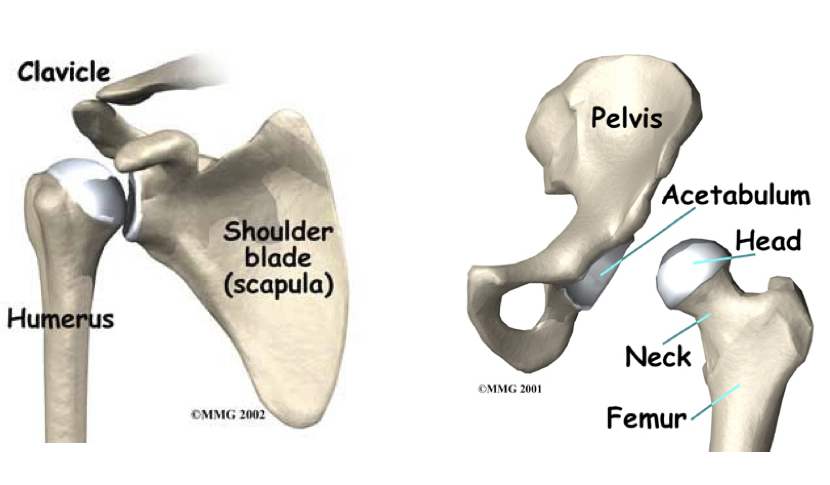
The term ‘shoulder’ refers to the clavicle, shoulder blade, and arm. The gleno-humeral joint (shoulder joint) is a ball and socket joint where the head of the humerus (arm bone) articulates with the glenoid fossa of the scapula.
Scapular-Wall-Slide-Anatomy
Image modified from John Hull Grundy book, “Human Structure and Shape”
Healthy shoulder function requires a balance of scapular stability, arm flexibility, and good motor control during arm movement. Wall slides train the muscles surrounding the scapula for both dynamic and static stability – controlling the position of the scapula during arm movement.
Two important positions for athletes that lift weight overhead are upward rotation and retraction/depression.
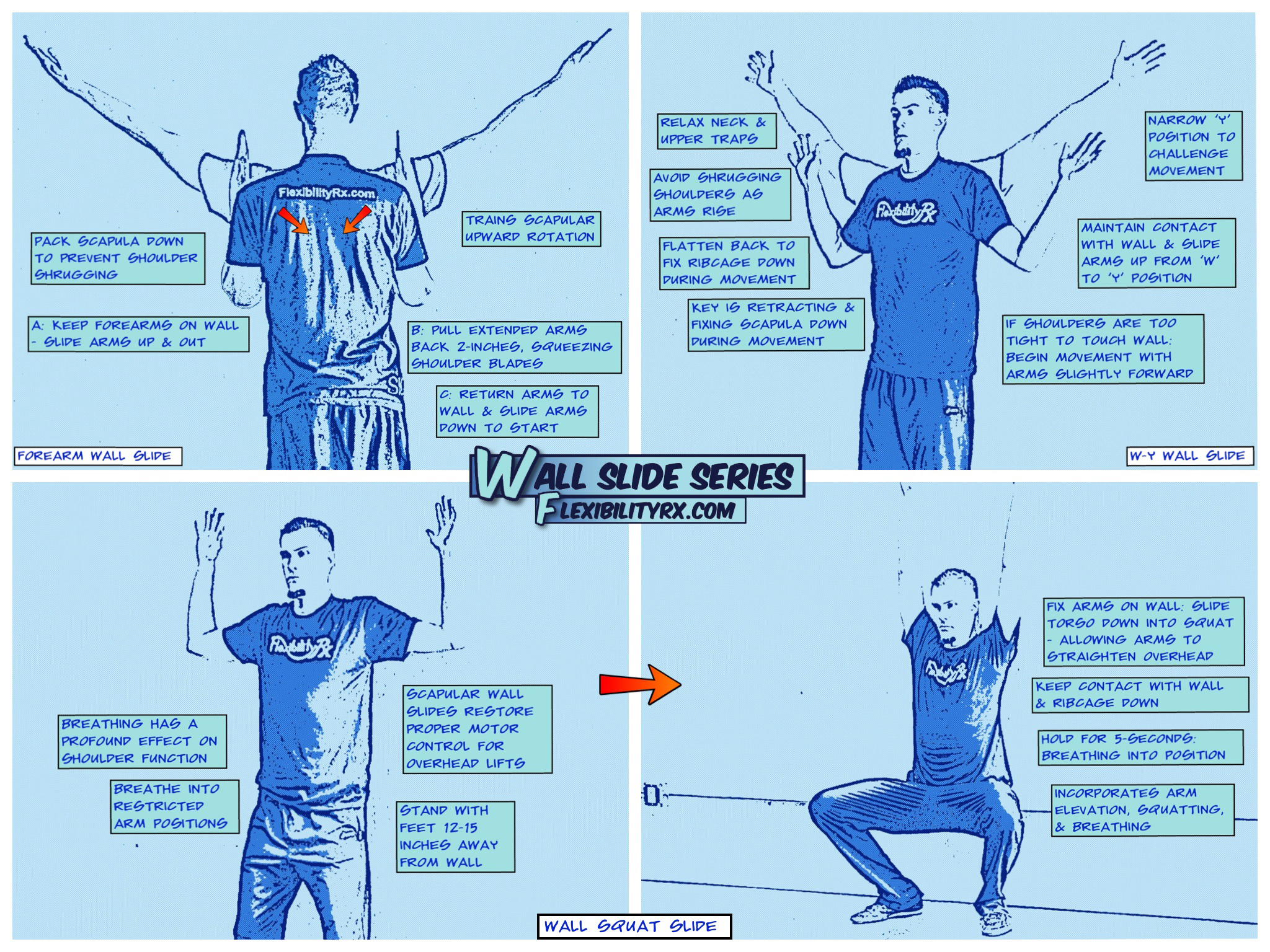
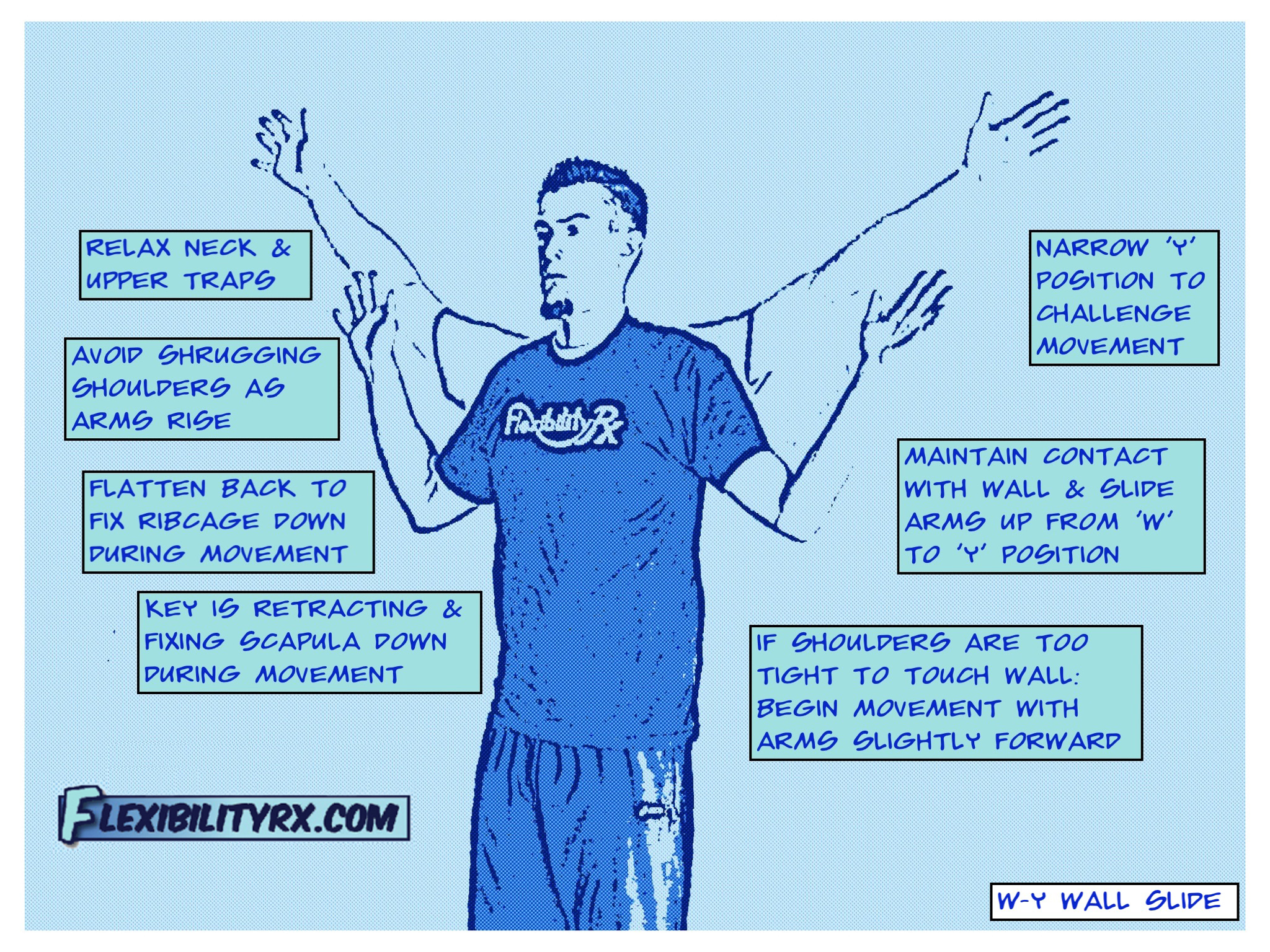
The forearm wall slide trains dynamic scapular stability – upward rotation. The W/Y wall slide trains static scapular stability for retraction and depression.
Upward rotation is needed for movements like the shoulder press, push-press, push-jerk, and pull-up – where the arms are overhead inline with the shoulders. Retraction and depression is needed for movements like the overhead squat and snatch – where the arms are abducted (out to the sides) in a wide grip. All overhead positions require upward rotation to support shoulder flexion.
Upward Rotation
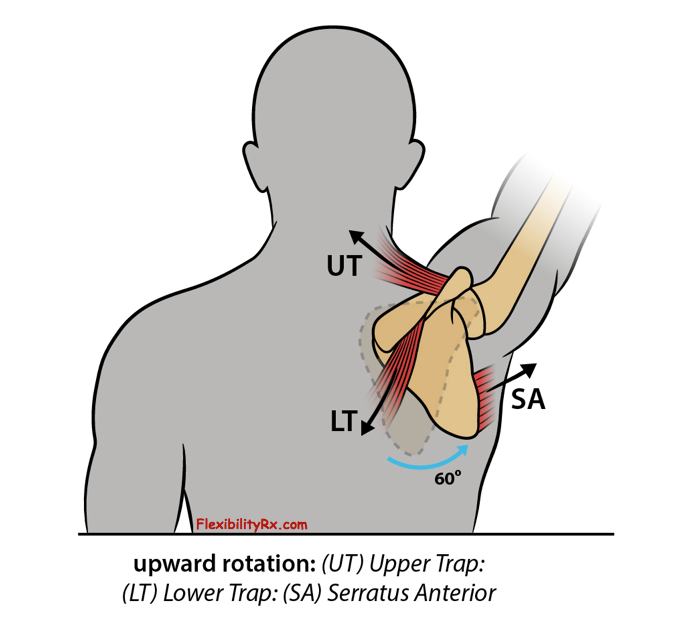
Upward rotation refers to coordinated movement of the scapula and arm during shoulder flexion. This 3-to-1 ratio of arm to scapular movement is called scapulo-humeral rhythm – the scapula upwardly rotates 60-degrees during the 120-degrees of shoulder flexion. If the scapula is fixated or unable to move in coordination with the arm – shoulder flexion will be limited.
Scapular-Upward-Rotation
Poor upward rotation is the most common shoulder dysfunction – physical therapist Shirley Sahrmann refers to this pattern as, “Downward Rotation Syndrome.”
“Downward Rotation Syndrome” is an imbalance where the downward rotators (levator scapula, pec-minor, rhomboid) are tight/overactive & the upward rotators are weak/inhibited (serratus anterior, lower/upper trapezius).
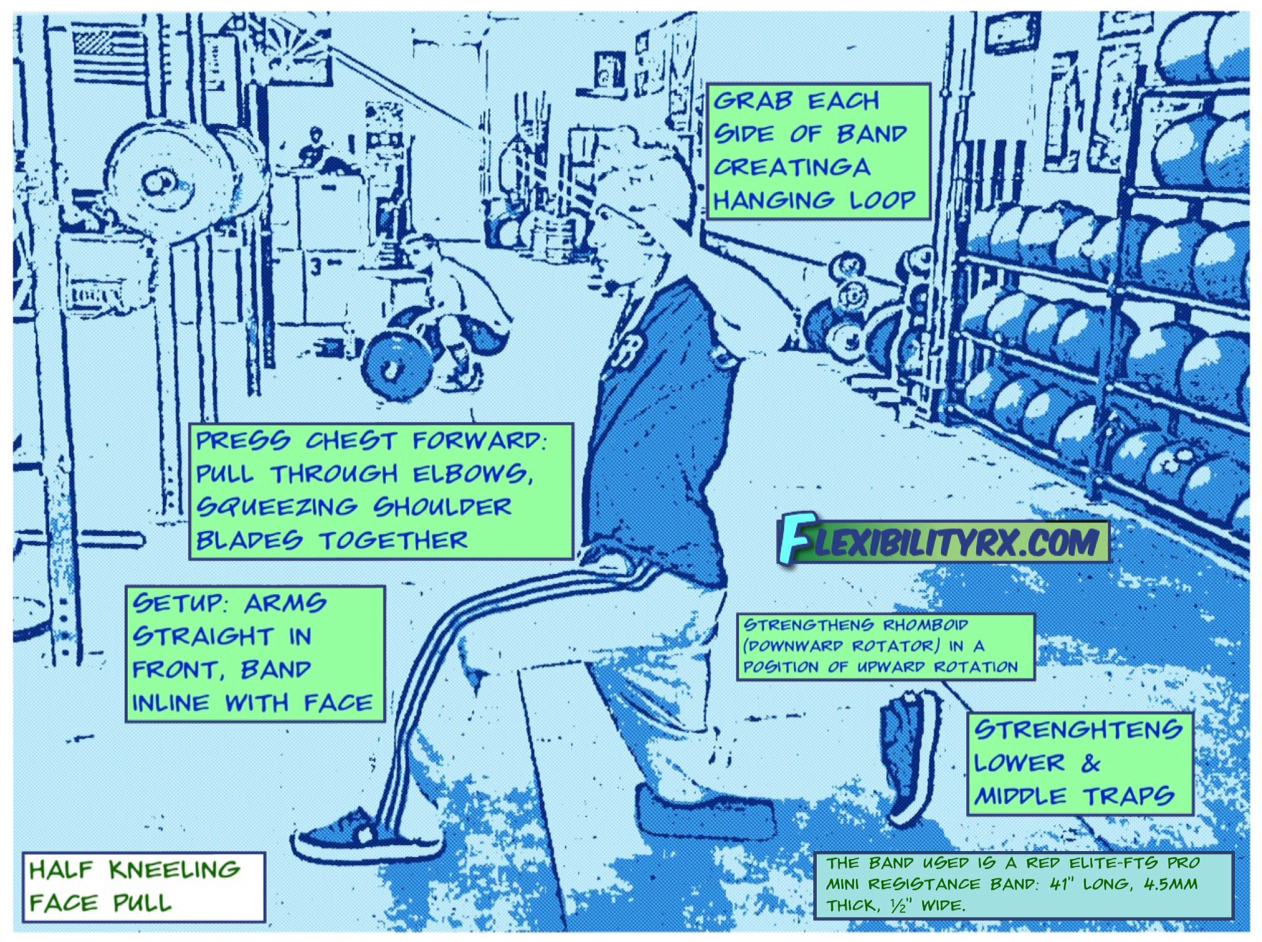
Restoring upward rotation requires a combination of stretching the downward rotators, strengthening the upward rotators (scapular plank pushups, half-kneeling face pulls, overhead shrugs), and training proper shoulder motor control (wall slides).
Forearm Wall Slide
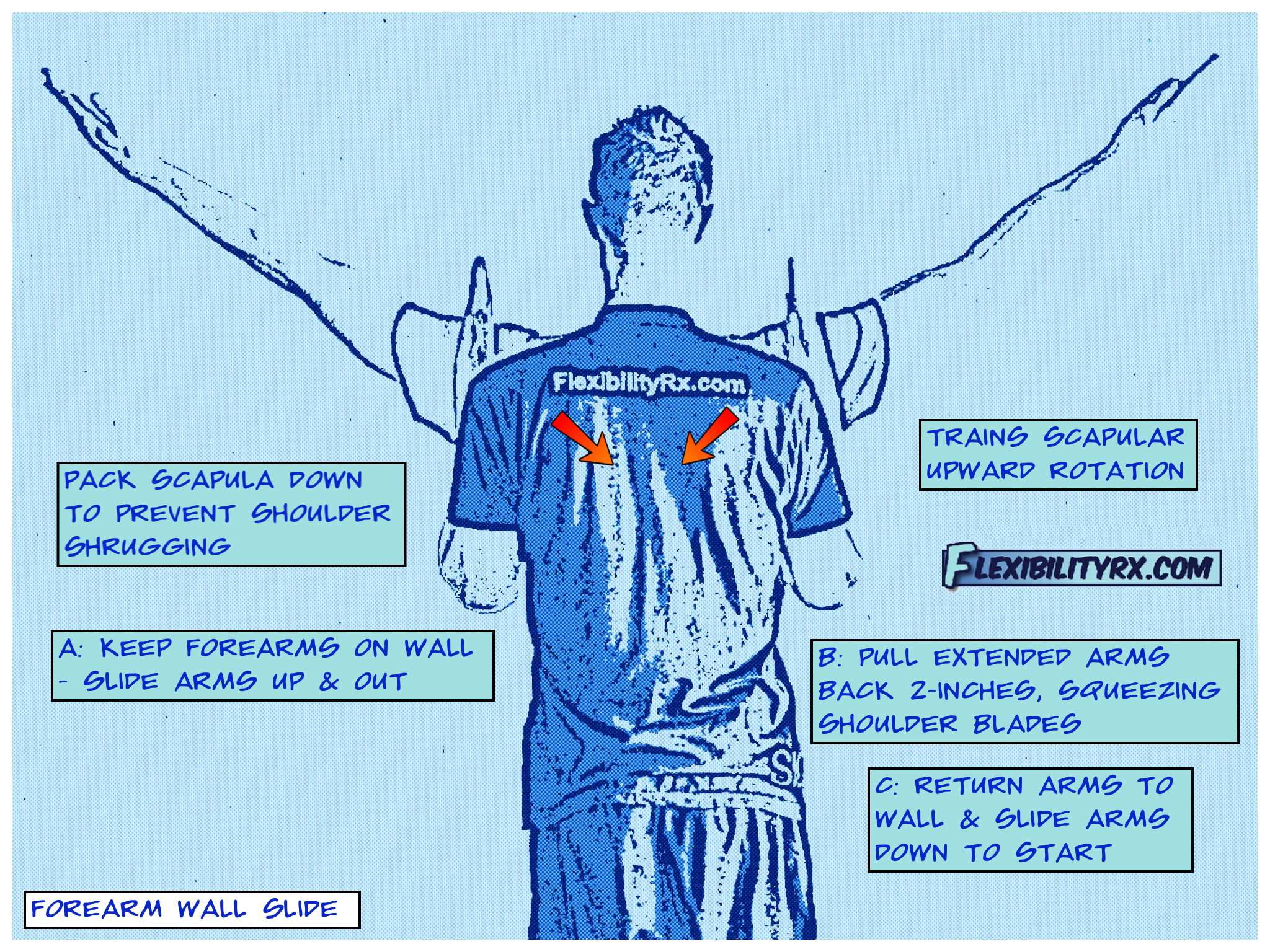
Begin with your forearms in contact with the wall, shoulder width apart. The elbows are bent at ninety degrees and wrists inline with the elbows. Keeping your forearms in contact with the wall – slide your arms up and out – without shrugging the shoulders. Controlling the lower part of the shoulder blade with the lower trapezius helps prevent the shoulders from elevating during the movement.
I use the term ‘pack scapula down’ – not to describe a rigid position – but a controlled retraction of the scapula during its upward rotation (see illustration). Focusing on lower trapezius engagement as the scapula rotates out to the side creates this position of dynamic stability.
Forearm-Wall-Slides
Integrating Lower and Upper Trapezius
At the top of the movement – with the arms extended, pull the arms back 2-inches retracting the shoulder blades (part B). A slight shrug while pulling the arms off the wall engages the upper trapezius for full upward rotation. Note – the shoulders remain relaxed down as the arms slide up and out (part A), before a shrug is added at the top position to pull the arms back (part B).
This motion is similar to an overhead barbell shrug where a shrug at the top of the lift is used to enhance upward rotation – as the scapula is controlled by the lower trapezius. This timing of lower and upper trapezius activation takes some practice – the initial focus should be upward rotation without elevating the shoulders (part A of the exercise).
After pulling the arms back off the wall (part B) return the arms to the wall and slide them back down to the starting position – maintaining contact with the wall (part C).
Another way to get a feel for scapular upward rotation is pullups. The scapula starts in upward rotation during the hang and then returns to a neutral position (downwardly rotates) as you pull up towards the bar. The advantage of the forearm wall slide is that you start in a neutral position and move into upward rotation.
W/Y Wall Slide
While the forearm wall slide trains upward rotation, the W/Y wall slide trains retraction and depression of the shoulder blade. If you move your arms from a shoulder press position out to an overhead squat position – you can feel the slight difference in position of the shoulder blade. While a shoulder press requires active scapular movement during shoulder flexion, the overhead squat and snatch require more of a fixed shoulder blade position to support the bar overhead. The W/Y wall slide trains scapular stability during active range of motion for the arms.
Scapular-Wall-Slide-2
“The key to the Wall Slide (W/Y) is that the shoulder blades remain retracted and depressed while the gleno-humeral joint attempts to move the arms overhead. They are the “air guitar” of overhead pressing. Many beginners will actually cramp in the lower trap/ rhomboid area as they attempt this exercise. The key is that the forearms must slide up in contact with the wall while the shoulder blades stay down and back.” – Mike Boyle
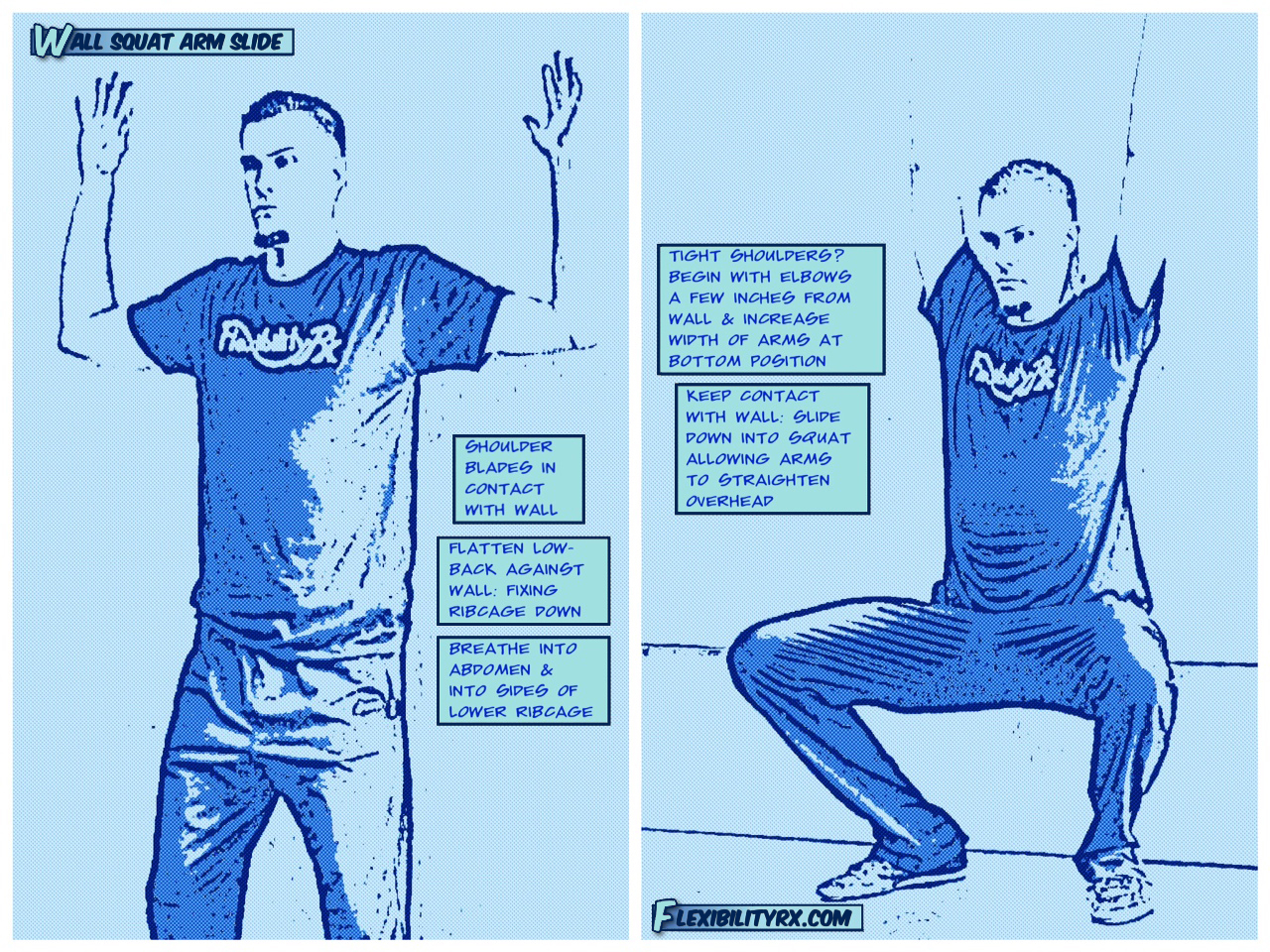
 Wall Squat Arm Slide
The wall squat arm slide integrates anterior core stability and thoracic extension with shoulder flexion. Anterior core stability is needed to maintain neutral hips and prevent ribcage flair during overhead lifts. Over-extending the low-back and allowing the ribcage to rise during a shoulder press takes away the foundation – hip and core stability – for scapular stability.
Wall-Slide-Exercise
Anterior Core Stability – Good Ribcage Position (Neutral Lumbar/Thoracic Extension) – Stable Scapula Position = Arm Mobility
This movement also integrates upper and lower body movement: the low-back remains in contact with the wall as the hips descend into flexion and arms rise. Note your breathing as you perform a few repetitions – try to breathe into the sides of your lower ribcage. You can revisit the Kolar Wall Bug (see here) to help improve anterior core stability, diaphragmatic breathing, and training a ribcage down position.
Related Resources
Eric Cressey: Forearm Wall Slides with Band (link)
Eric Cressey: Serratus Wall Slides (link)
Aaron Swanson: The New Overhead Shoulder Position (link)
Tony Gentilcore: Exercises You Should Be Doing: Forearm Wall Slides (link)
Craig Liebenson: A Key Link in the Locomotor System: The Upper-Thoracic Spine (link)
Mike Robertson: Is Scapular Stability a Myth (link)
Bret Contreras: When Coaching Cues Attack: Packing the Shoulder (link)
FlexibilityRx™: Shoulder Traction Series (link)
- Kevin Kula, “The Flexibility Coach” – Creator of FlexibilityRx™

Shoulder Mobility and Scapular Stability

Upward-Rotation-Scapular-Stability

Scapular Stability for Shoulder Mobility

Scapular Upward Rotation
Many athletes that struggle with pressing or pulling overhead are victims of what Shirley Sahrmann calls “Downward-Rotation Syndrome.”
Full range of motion for raising your arms overhead requires sixty-degrees of upward rotation from the shoulder blade. This coordinated movement of the scapula with the arm (glenohumeral rhythm) is what supports the overhead mobility needed for the overhead squat and snatch.
Scapular-Upward-Rotation

Scapular Upward Rotation = Scapular Stability

When the upward rotators (lower traps, serratus anterior) are weak, the downward rotators become overactive (levator scapular, pec-minor, rhomboid) – acting as stabilizers. Stability is control in the presence of change – active control of the scapula during shoulder flexion (good upward rotation) is a big component of scapular stability.
A stable scapula supports a mobile arm (glenohumeral joint)
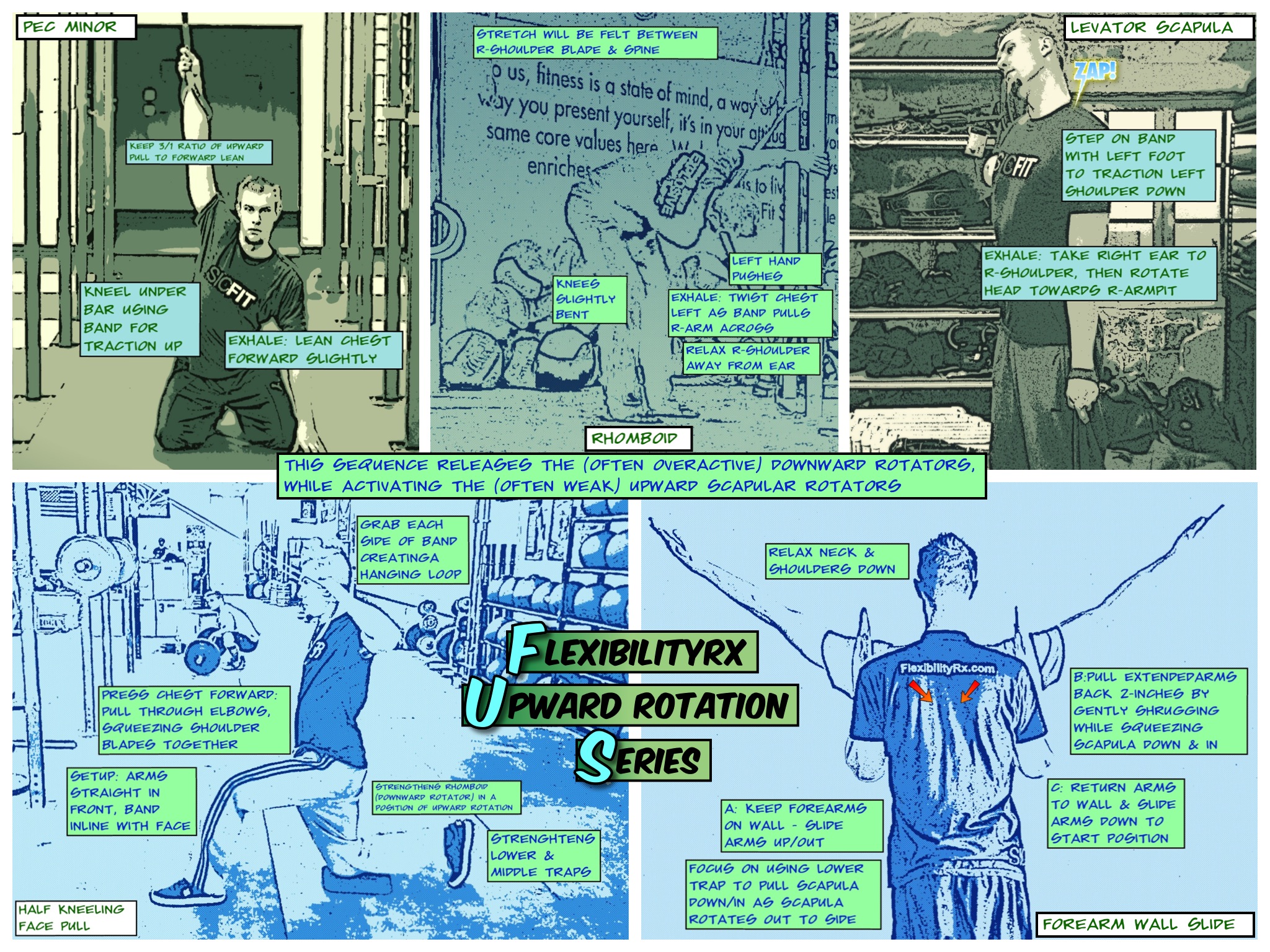
This routine releases the downward rotators, while activating the upward rotators.
Releasing the Downward Rotators
The downward rotators of the scapula are pec-minor, levator scapula, and rhomboid.  These three muscles tend to be tight and/or overactive – limiting scapular upward rotation.
Pec-Minor
Pec-minor is the deep muscle of the chest that is tight on most people – creating an anterior tilt of the scapula and contributing to rounded shoulders.  The variations for pec-minor where covered here.
Levator Scapula
Levator scapula is the often-strained muscle of the neck that is responsible for the trigger points at the top of the scapula – the knot that many athletes complain of to their massage therapist.
While levator is often ‘locked-long’ it is important to release the associated fascia of this muscle and prevent it from elevating the shoulder blade during arm movement.
Rhomboid
Rhomboid is the muscle that sits between the shoulder blade and spine. Rhomboid is often tight pulling the scapula in towards the spine. This is one of the most often overlooked stretches.
While it is important to strengthen rhomboid with movements like bent-over rows – if the shoulder blades are pulled in towards the spine, it is important to focus on restoring scapular alignment.
Athletes should refrain from exercises that involve retraction and depression of the shoulder blades (bench-press, rows) and focus on upward rotation – until alignment is improved.
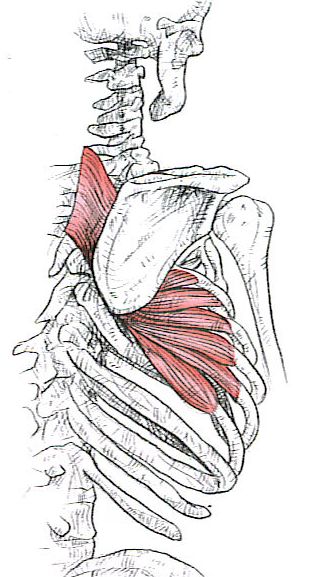
While both rhomboid and serratus anterior both attach to the shoulder blade – they are actually a continuous line of connective tissue that maintains a tug-of-war for normal alignment and scapular function. Below: rhomboid on the left, serratus anterior on the right…
rhombo-serratus-muscle
The scapular wall slide activates serratus anterior, while the half-kneeling face-pull strengthens rhomboid in a movement pattern of upward rotation.
The common cue of “Squeeze your shoulder blades together” for improving posture is detrimental to shoulder health.
Thoracic Position & Scapular Stability
Athletes should avoid cues that create rigid postures.  Squeezing your shoulder blades together to improve posture is just as futile as “Squeeze your pelvic floor muscles while driving.” Yes, I actually read that somewhere.
Instead, think of lengthening your spine and breathing into your lateral ribcage – let your awareness lead your breath there – don’t force anything. This length in the spine and diaphragmatic breathing is what supports a good spine and ribcage position.
Scapular stability is dependent on good thoracic position. While many athletes need to work on improving thoracic extension, some gym members are ‘stuck in extension’ – physical therapist Shirley Sahrmann refers to this as, “Thoracic Extension Syndrome.”
This is beyond the scope of this blog; just realize that thoracic position is needed for scapular stability. Athletes stuck in extension should check out this amazing blog and see the Eric Cressey forearm wall slide variation video. Eric shows the wall slide with a slight rounding of the thoracic spine to counter extension.
The Diaphragm’s Role in Scapular Stability
While scapular stability is dependent on the function of the upward rotator serratus anterior, serratus anterior function is dependent on thoracic position and diaphragmatic breathing. DNS Practitioner – Hans Lindgren explains,
“When asked which muscle is the most important in providing scapular stability I am sure most people would think of the serratus anterior or the mid and lower trapezius.  I would probably have done the same before I started to study with Pavel Kolar in the DNS program.
 My answer to that question would now be the Diaphragm.” 
He goes on to explain that, “The stabilizers of the scapula, as well as all other muscles, need a fixed anchor point to pull towards. That anchor point in this case is the ribcage and the “core” all stabilized by the diaphragmatic contraction.”
In summary: both thoracic position and diaphragmatic breathing are prerequisites for improving scapular stability.
Future blog posts will go into greater detail, the Kolar Wall Bug trains both – see here.
Two Great Shoulder Mobility Exercises
The half-kneeling face pull trains thoracic extension, upward rotation and strengthens the lower and middle trapezius.  This is one of the best shoulder exercises for maintaining shoulder health and helping restore overhead mobility.
Half-Kneeling-Face-Pull
The scapular wall slide series was covered here. The forearm wall slide trains upward rotation.
Forearm-Wall-Slides
Adding upward rotation exercises to your pressing and pulling programming is a great way to balance your training for strong shoulders.
- Kevin Kula, “The Flexibility Coach” – Creator of FlexibilityRx™
Related Resources
Juggernaut Training: The Scapula and Thoracic Spine – A Classic Love Story (link)
Eric Cressey: Serratus Wall Slide Variations (link)
Mike Robertson: Pushups, Face Pulls, and Shrugs (link)
Hans Lindgren DC (DNS Practitioner): Scapular stabilization (link)
FlexibilityRx™: Rhomboid Stretch (link)
FlexibilityRx™: Levator Scapula Stretch (link)

Hip and Shoulder Mobility Drills

Hip-Shoulder-Mobility-Drills

Hip and Shoulder Mobility Drills

What is Traction?
Traction refers to the decompression of the hip or shoulder joint-capsule.  Both the head of the humerus and head of the femur can be tractioned to create space in the joint-capsule.  Fifty percent of range of motion is in the joint-capsule and the surrounding ligaments and deep muscle fibers.
Joint-Capsule
As Chris Frederick (author of Stretch-to-Win) points out,
“When full ROM in a joint is inhibited, then ROM in the muscle is also restricted, because muscles attach to bones and bones connect to other bones by way of joints. The muscles that are the closest and deepest layers will react to positive or negative changes in the joint capsule. 
These muscles are shorter in length and anatomically and functionally closer to the joint capsule than the muscles that cross two or more joints; when released, therefore, they pave the way for the longer muscles to release faster and more efficiently.”

Banded Distraction

A common term used by followers of Kelly Starrett (The Supple Leopard) is “banded distraction.”  KStarr is referring to joint-capsule traction.  Ann and Chris Frederick (Stretch-to-Win®) use the term traction – same concept.  In addition to creating space in the joint-itself, traction relaxes the nervous system – which you could say ‘distracts’ the nervous system to allow for a deeper stretch.

When to Use Hip and Shoulder Traction

Traction can be used before, between, and after stretches.  If you are extremely tight in the glutes and hip, you may want to begin with traction, stretch your hips and then traction again at the end.  This hip and shoulder traction combo can also be used on it’s own as a quick mobility sequence pre-workout.
While this combo focuses on traction itself, traction should be applied during all of your stretches.   Lengthening the spine during lower body stretches (glutes) and using bands not only to stretch muscles, but also to create space in the joint-capsule during the stretch (lats).
- Kevin Kula, “The Flexibility Coach” – Creator of FlexibilityRx™ 
Related Resources
Elite FTS: Prehabilitation for Bigger PRs (link)
Stretch to Win: PT-on-the-Net – Improving Squat Patterning (link)